Customers and visitors of www.raskantik.com are only admitted under the condition that they offer, admit or purchase the offered historical and military items, especially those from the NS period, only for: educational purposes, protection against illegal and subversive aims, for scientific and art historical research, the education and reporting regarding historical events, or military history and uniform research.
The company www.raskantik.com Henrik Rask is offering these items only under these conditions.
With the purchase respectively the bidding for items which carry the Third Reich emblem or carry emblems of other important organisations of that time, the bidder commits to using these items only for historical scientific reasons as mentioned above and will by no means use them for propaganda purposes. Such a use would be liable to prosecution according to § 86a StGB (German criminal law) and all potential vendors, vendors and purchasers of such items confirm that they have no intentions whatsoever to commit a punishable offence according to § 86a StGB. Admittance / entries of items will only be accepted under these conditions.
Customers and visitors fully accept these conditions with the acceptance of the online offer.
Nutzungsbedingungen
Vorausgeschickt wird, dass Kunden und Besucher der Homepage www.raskantik.com Fa. Raskantik nur unter der Voraussetzung zugelassen werden, wenn sie die angebotenen zeitgeschichtlichen und militärhistorischen Gegenstände, insbesondere diejenigen aus der nationalsozialistischen Zeit, nur zu Zwecken der staatsbürgerlichen Aufklärung, der Abwehr verfassungswidriger und verfassungsfeindlicher Bestrebungen, der wissenschaftlichen und kunsthistorischen Forschung, der Aufklärung oder der Berichterstattung über die Vorgänge des Zeitgeschehens oder der militärhistorischen und uniformkundlichen Forschung erwerben.
Die Firma Raskantik bietet diese Gegenstände nur unter diesen Voraussetzungen an.
Mit dem Kauf von Gegenständen, die mit Emblemen des Dritten Reiches oder damals maßgeblicher Organisationen versehen sind, verpflichtet der Käufer sich dazu, diese Dinge nur für historisch-wissenschaftliche Zwecke aus den oben genannten Gründen zu erwerben und sie in keiner Weise propagandistisch zu nutzen. Eine solche Nutzung wäre nach § 86a StGB strafbar, und alle Käufer solcher Gegenstände versichern, dass sie keinerlei strafbaren Absichten im Sinne des § 86a StGB verfolgen. Nur unter dieser Voraussetzung werden Bestellungen akzeptiert.
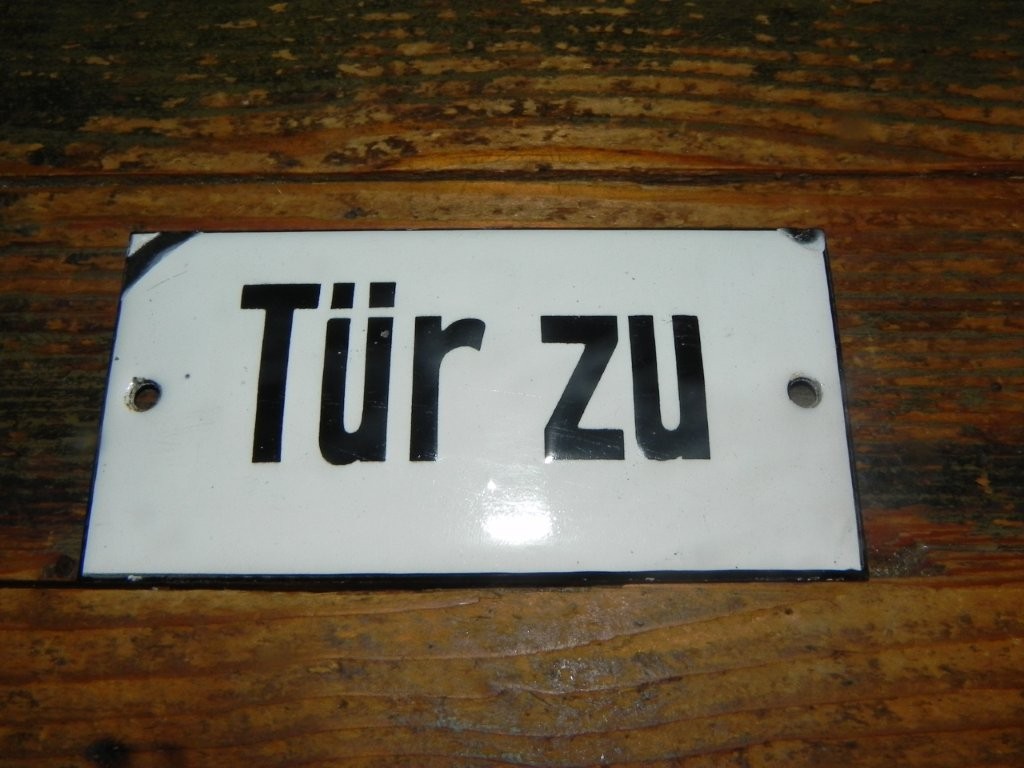
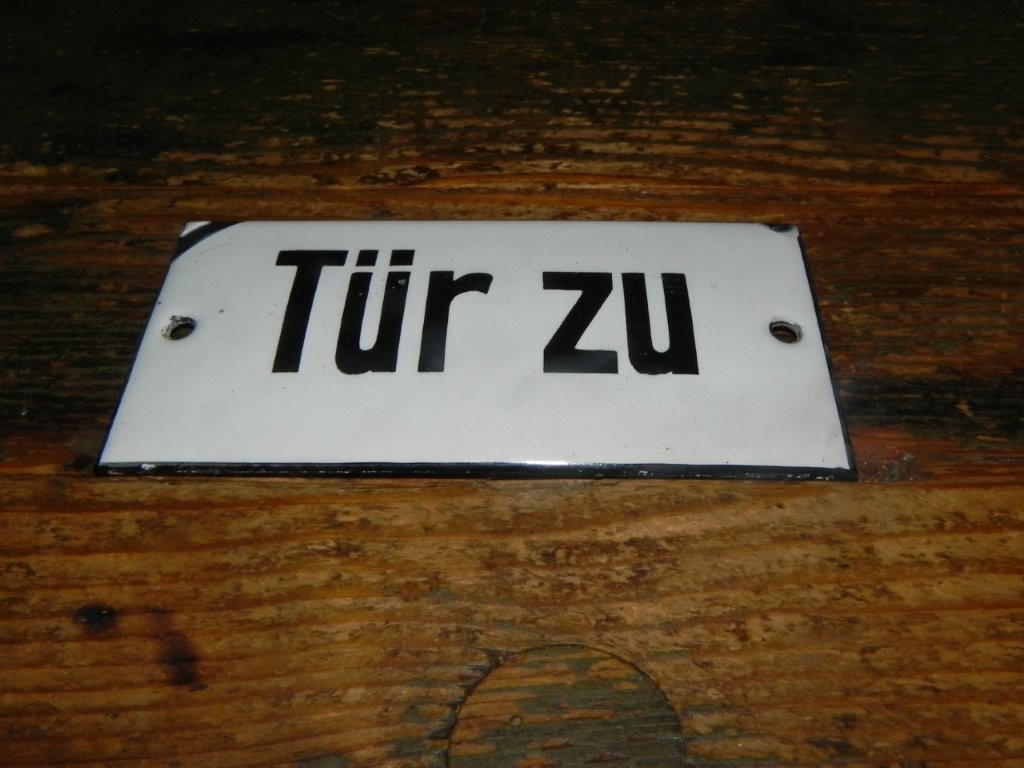
An enamel sign featuring the German directive “Tür zu” (Close the door), typically used in residential buildings, public offices, or commercial facilities during the 1930s era.
Format: Landscape format orientation (Querformat).
Text: Stenciled typography in black against a white background with a thin black border.
Period: Dated to the 1930s era.
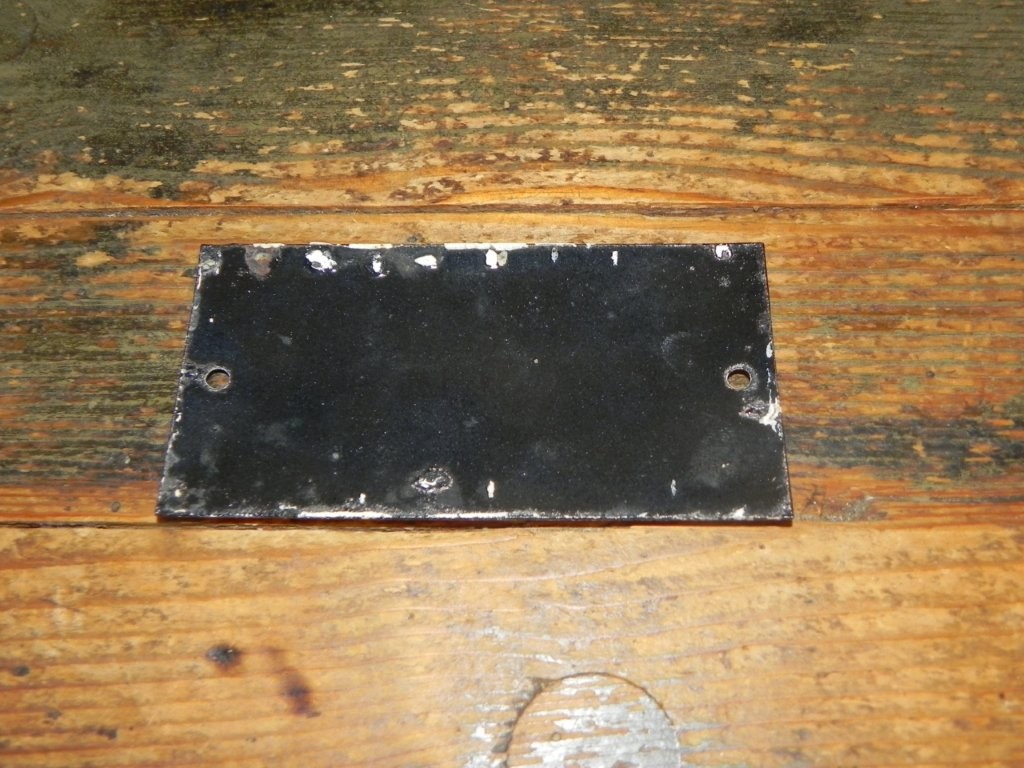
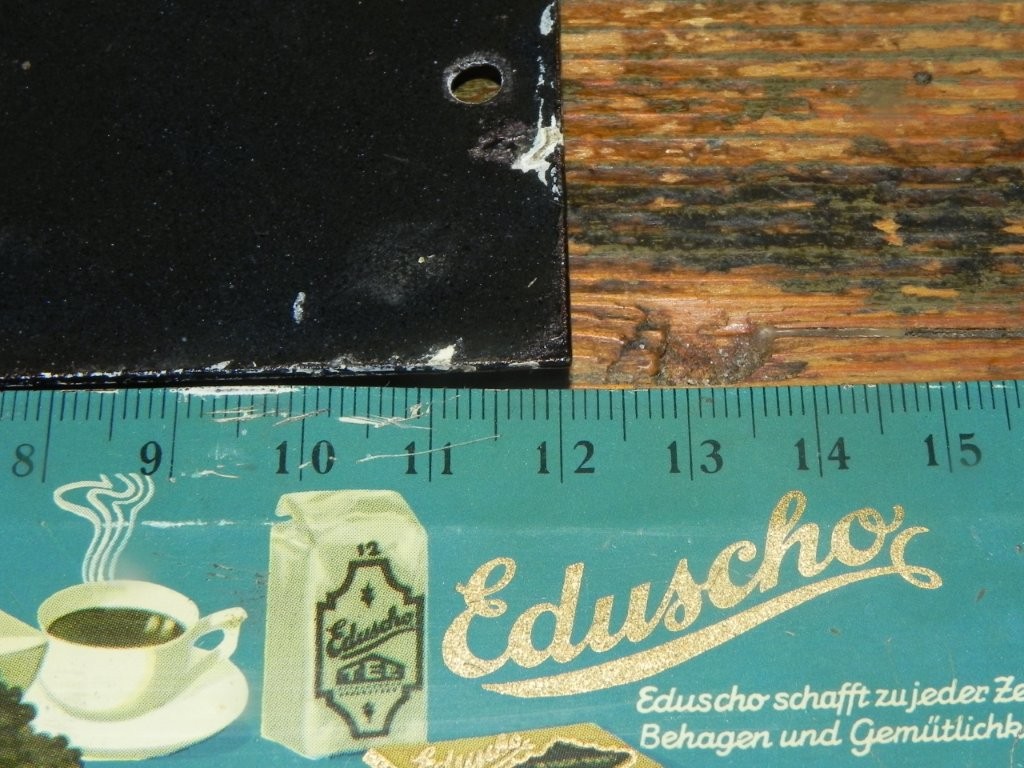
Reverse: Solid dark enameled backing plate.
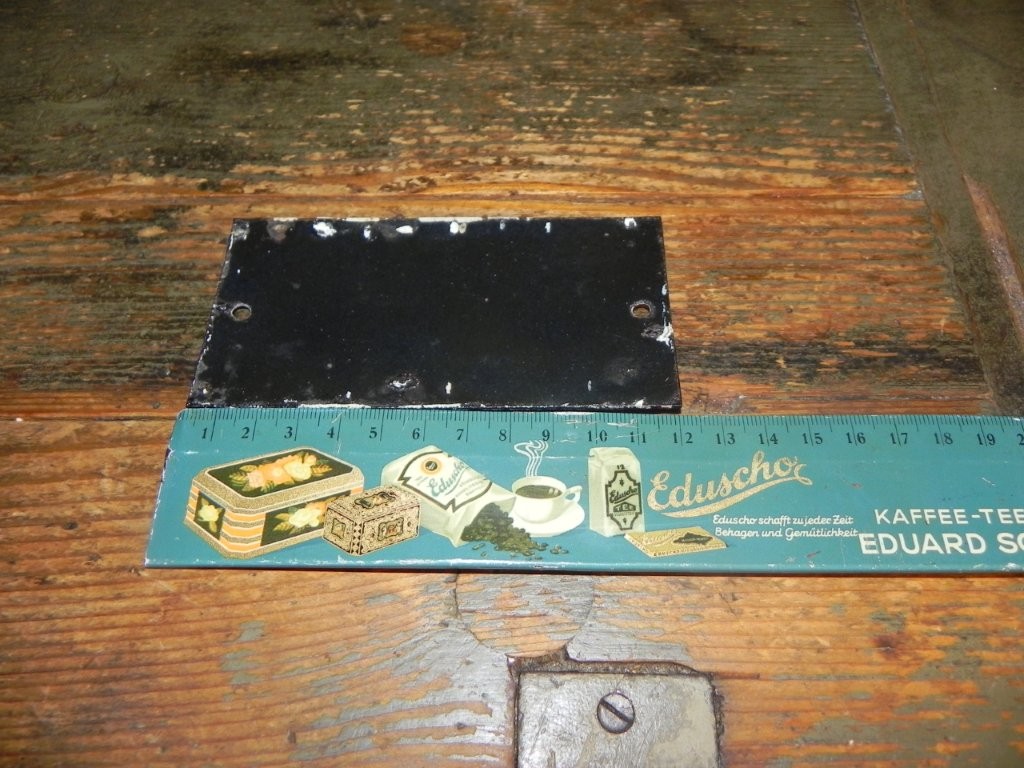
Dimensions: 12 cm x 6 cm.
Mounting: Fabricated with two factory-punched side holes for screw mounting.
Small enamel door and instruction signs (German: Emailleschild or Türschild) are made from sheet steel coated with a glass-like layer fused on at high temperature. Industrial production of enamelled signs began in the second half of the 19th century, with Germany among the leading producers, and the trade peaked in the first half of the 20th century. More than 300 enamelling works operated in Germany alone during the 1930s. Short imperatives such as "Tür zu" ("door closed/close the door") belong to the everyday notice signs used in stairwells, offices, shops, workshops and institutions, where they asked people to keep a door shut. They were mounted with screws through pre-punched holes. Most enamel signs are rectangular, with oval and round shapes much less common. They were usually stencilled, while lithographic or screen-printed methods were used for more complex designs. Collectors tell period signs apart from modern reproductions by the heavy-gauge steel, the glassy fired surface, the finish on the back, typically a dark enamel, and any maker's marks. Plain notice signs of this kind were generic civilian items and are not specific to the military or the Wehrmacht.
To provide the best experiences, we use technologies like cookies to store and/or access device information. Consenting to these technologies will allow us to process data such as browsing behavior or unique IDs on this site. Not consenting or withdrawing consent, may adversely affect certain features and functions.
Functional
Always active
The technical storage or access is strictly necessary for the legitimate purpose of enabling the use of a specific service explicitly requested by the subscriber or user, or for the sole purpose of carrying out the transmission of a communication over an electronic communications network.
Preferences
The technical storage or access is necessary for the legitimate purpose of storing preferences that are not requested by the subscriber or user.
Statistics
The technical storage or access that is used exclusively for statistical purposes.The technical storage or access that is used exclusively for anonymous statistical purposes. Without a subpoena, voluntary compliance on the part of your Internet Service Provider, or additional records from a third party, information stored or retrieved for this purpose alone cannot usually be used to identify you.
Marketing
The technical storage or access is required to create user profiles to send advertising, or to track the user on a website or across several websites for similar marketing purposes.